

Introduction
The monsoon is a beautiful season, but for Indian homes, it also poses a serious electrical safety risk. Moisture in switchboards, damaged outdoor wiring, poor earthing, wet walls, and unsafe geyser connections can quickly lead to short circuits, electric shocks, or fires.
Most electrical accidents during the rainy season can be prevented with a simple home electrical inspection before monsoon. Whether you live in Chennai, Mumbai, Delhi, Bangalore, Pune, Hyderabad, or any rain-prone Indian city, checking your home wiring before heavy rain is not optional. It is a basic safety step.
This monsoon electrical safety checklist will help you understand what to check, what to avoid, and when to call a certified electrician.
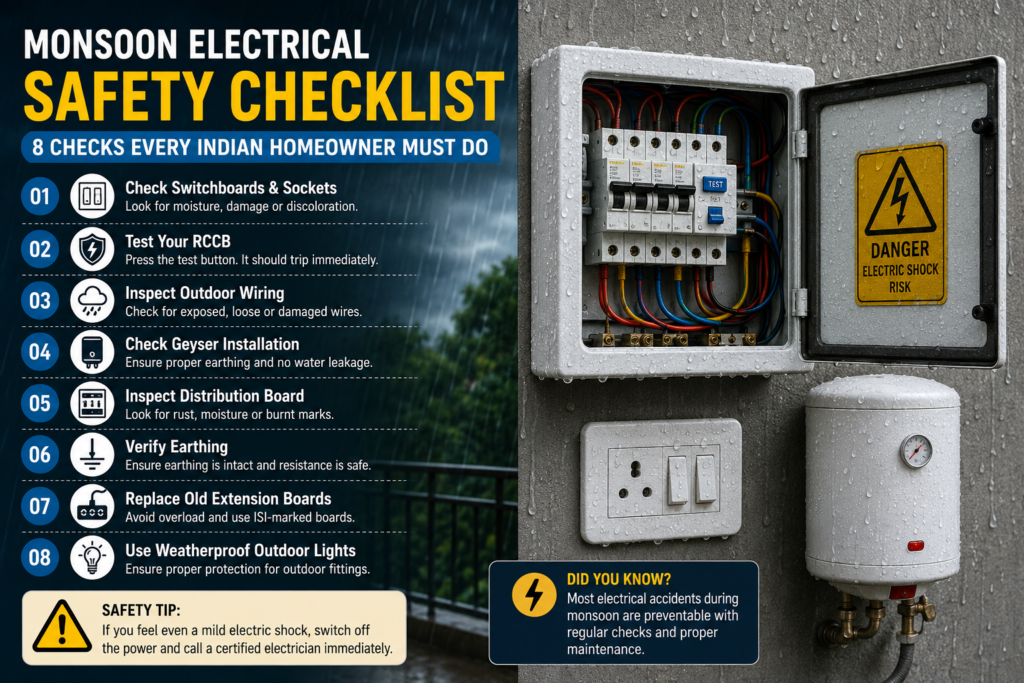
Why Electrical Safety Is Important During Monsoon
During monsoon, humidity levels rise, rainwater enters walls and balconies, and power fluctuations become more common. These conditions can affect switchboards, wiring joints, geysers, distribution boards, and outdoor lights.
The biggest danger is that many electrical faults are not visible at first. A socket may look normal but may have moisture inside. A geyser may work normally but may have a hidden earthing problem. A small electric tingle from a tap or appliance may be a warning sign of a serious fault.
That is why every Indian homeowner should follow basic electrical safety tips for Indian homes before and during the rainy season.
8-Point Monsoon Electrical Safety Checklist
1. Check Switchboards and Sockets for Moisture
Start by checking every switchboard and plug point in your home. Look for yellow marks, black spots, bubbling, cracks, a burning smell, or dampness around the socket.
If a switchboard feels warm or wet, do not use it. Switch off the power supply for that room and call an electrician. Moisture inside a switchboard can cause short circuits and electric shocks.
2. Test Your RCCB for Home Safety
An RCCB, or Residual Current Circuit Breaker, is an important safety device that protects your family from electric shock. It detects current leakage and cuts off power quickly.
Go to your distribution board and look for the RCCB with a test button. Press the test button. If it trips immediately, it is working. If it does not trip, you need an electrician to inspect or replace it.
RCCB for home safety is one of the most important monsoon protection steps.
3. Inspect Outdoor Wiring
Balcony lights, terrace pump wiring, garden lights, gate lamps, and outdoor plug points are highly exposed during monsoon.
Check if the wires are cracked, hanging loose, touching wet walls, or placed inside damaged junction boxes. Do not touch outdoor wires yourself. Take a photo and call a certified electrician.
Outdoor wiring should be protected with proper weatherproof materials.
4. Check Geyser Earthing and Safety
Geysers are one of the biggest electrical risks during monsoon because they combine water, metal, and electricity.
If you feel a mild shock or tingling sensation when touching taps, shower fittings, or the geyser body, switch off the geyser immediately. This may indicate a geyser earthing problem.
Before monsoon, ask an electrician to check the geyser earthing, thermostat, heating element, and wiring connection.
5. Look Inside the Distribution Board Safely
Your distribution board controls power supply to your entire home. During monsoon, moisture can enter the board, especially if it is near an outer wall, bathroom, or staircase.
Open only the outer cover and visually check for rust, water stains, burning smell, or moisture. Do not touch any internal part. If you notice anything unusual, call an electrician.
6. Check Your Home Earthing
Earthing protects your family by sending fault current safely into the ground. If earthing fails, metal appliances, taps, or pipes may become dangerous.
A warning sign of poor earthing is a small shock when touching metal appliances, water taps, geysers, washing machines, or refrigerator bodies.
Earthing cannot be checked properly without a testing meter. A certified electrician should inspect it before the rainy season.
7. Replace Old Extension Boards
Old or low-quality extension boards are common fire hazards in Indian homes. During monsoon, humidity makes them even more risky.
Replace extension boards that are more than three years old, have loose sockets, yellow marks, burning smell, or no ISI mark. Never connect heavy appliances like geysers, refrigerators, washing machines, or ACs to extension boards.
8. Use Weatherproof Outdoor Lights
Outdoor lights must be suitable for rain exposure. Garden lights, balcony lights, gate lights, and terrace lights should have proper water protection.
If your outdoor lights are normal indoor fittings, they can short-circuit during rain. Use weatherproof fittings with suitable IP ratings and ask an electrician to install them safely.
Call an Electrician Immediately If You Notice These Signs
- Do not wait if you see any of these warning signs:
- Any electric shock or tingling from taps, pipes, geysers, or appliances.
- Burning smell from switchboards, plug points, or wiring.
- Repeated MCB tripping during rain.
- Flickering lights across the home.
- Water stains near electrical points.
- Sparks from switches or sockets.
- Appliances working unevenly during rain.
- These signs may indicate moisture damage, poor earthing, loose connections, or current leakage.
Pre-Monsoon Electrical Inspection Cost in India
A basic home electrical inspection before monsoon usually includes checking switchboards, sockets, earthing, geyser wiring, RCCB, distribution board, and outdoor wiring.
In India, a standard inspection for a 2 or 3 BHK home may cost around ₹500 to ₹1,500 depending on the city, home size, and electrical condition.
Common repair costs may include:
- Socket replacement: ₹200 to ₹800
RCCB installation: ₹800 to ₹2,000
Geyser safety check: ₹400 to ₹1,200
Earthing repair: ₹600 to ₹2,500
Outdoor wiring repair: ₹800 to ₹3,000
The cost of inspection is small compared to the risk of electric shock, fire, appliance damage, or emergency repairs.
What Makes QuickRepair Different
QuickRepair helps Indian homeowners book trusted electricians for safe and reliable home electrical inspection before monsoon.
Here is why homeowners choose QuickRepair:
Certified electricians for home safety checks.
Upfront pricing before work begins.
Same-day and next-day booking options.
Inspection for geysers, earthing, switchboards, RCCB, sockets, and wiring.
Service support across major Indian cities.
QuickRepair is useful for homeowners, tenants, apartment owners, senior citizens, and families who want safe electrical systems during the rainy season.
Conclusion
Monsoon electrical safety should never be ignored. A wet switchboard, damaged wire, poor earthing, or unsafe geyser connection can put your family at serious risk.
Before the next heavy rain, check your switchboards, test your RCCB, inspect your geyser, look for outdoor wiring damage, and book a professional electrical inspection.
A few minutes of checking today can prevent a major accident tomorrow.
Book a certified electrician with QuickRepair and keep your home safe this monsoon.
FAQs
1. What is the most important electrical safety check before monsoon?
The most important checks are RCCB testing, earthing inspection, geyser safety check, and switchboard moisture inspection. These areas carry the highest risk during monsoon.
2. Why do switchboards become dangerous during the rainy season?
Switchboards become dangerous when moisture enters through walls, gaps, or wiring points. This can cause short circuits, sparks, electric shock, or a burning smell.
3. How do I know if my home has an earthing problem?
If you feel a mild shock or tingling sensation when touching taps, geysers, washing machines, refrigerators, or metal appliance bodies, your home may have an earthing problem. Call an electrician immediately.
4. Is RCCB necessary for every Indian home?
Yes. An RCCB is strongly recommended because it cuts off power when current leakage is detected. It helps reduce the risk of serious electric shock.
5. Should I use my geyser during monsoon?
You can use a geyser only if it is properly installed, earthed, and inspected. If you feel any shock from taps or the geyser body, switch it off immediately and call an electrician.
6. How much does a home electrical inspection cost in India?
A basic electrical inspection for a 2 or 3 BHK home may cost around ₹500 to ₹1,500. The cost may vary depending on your location and repair requirements.
7. Can I repair wet switchboards myself?
No. Do not repair wet switchboards yourself. Switch off the power and call a certified electrician. Touching a wet electrical point can be dangerous.